 ZarJob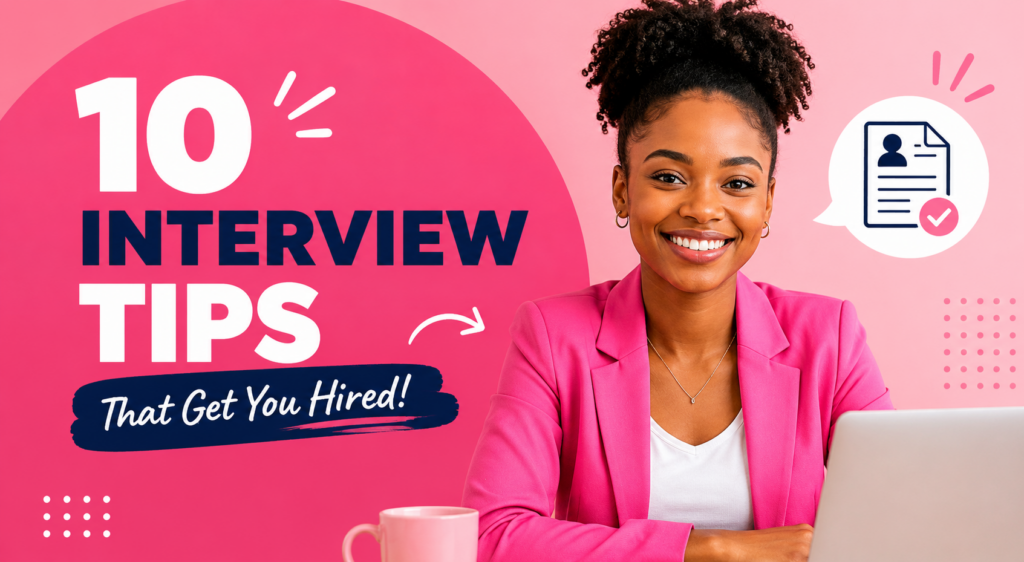
Landing an interview is already a major achievement. In today’s competitive job market, employers often receive hundreds of applications for a single position. Making it to the interview stage means your skills, experience, or potential have already caught the employer’s attention.
However, securing an interview and securing a job offer are two very different things.
Many candidates spend hours perfecting their CVs but fail to prepare properly for the interview itself. The interview is your opportunity to show employers who you are beyond your qualifications. It’s your chance to demonstrate confidence, professionalism, communication skills, and your genuine interest in the role.
Whether you’re applying for your first job, a learnership, an internship, or a senior position, these interview strategies can dramatically improve your chances of success.
Let’s explore 10 powerful interview tips that recruiters wish every candidate knew.
One of the fastest ways to impress an interviewer is by showing that you’ve taken the time to learn about the organization.
Unfortunately, many candidates walk into interviews knowing almost nothing about the company they’re hoping to join. This immediately signals a lack of preparation and interest.
Before your interview, spend time researching:
✅ The company’s mission and values
✅ Their products or services
✅ Recent news and achievements
✅ Their company culture
✅ Their social media presence
✅ Industry trends affecting the business
When interviewers ask:
“What do you know about our company?”
you should be able to answer confidently.
Even better, try connecting your own goals and values with the company’s mission. This helps employers see how well you might fit within the organization.
Look up your interviewer on professional platforms such as LinkedIn. You may discover shared interests, educational backgrounds, or career experiences that can help create a more comfortable conversation.
Interviews can be stressful, even for highly experienced professionals.
The pressure to perform well often causes nervousness, which can lead to forgetting important information or struggling to answer questions clearly.
One effective way to manage anxiety is to create a pre-interview routine.
Consider:
🧘 Meditation
🌬 Deep breathing exercises
🎵 Listening to calming music
🚶 Taking a short walk
☕ Arriving early and relaxing before entering
Even spending 10 minutes calming your mind can help improve your focus and confidence.
Remember:
Feeling nervous doesn’t mean you’re unqualified.
It simply means you care about the opportunity.
Almost every interview begins with a variation of this question:
“Tell me about yourself.”
Many candidates underestimate the importance of this question.
This is your opportunity to introduce yourself professionally and guide the direction of the conversation.
Instead of reciting your entire life story, focus on:
Structure your answer like a story.
Explain where you started, what you’ve learned, what you’ve achieved, and why you’re excited about this opportunity.
A well-prepared response helps create a strong first impression and sets a positive tone for the rest of the interview.
Employers don’t just want to hear what you can do.
They want proof.
That’s why many interview questions are designed to uncover real-life examples of your skills and experience.
You may be asked:
Prepare several examples before your interview.
A useful technique is the STAR Method:
Explain the challenge.
Describe your responsibility.
Explain what you did.
Share the outcome.
Using specific examples makes your answers more convincing and memorable.
Many candidates try to become someone they’re not during interviews.
They give rehearsed answers, pretend to have interests they don’t actually have, or try to fit into a personality they think employers want.
Most experienced recruiters can spot this immediately.
Employers aren’t simply hiring skills.
They’re hiring people.
Authenticity helps interviewers understand whether you’ll fit into the team and workplace culture.
Being genuine also helps you determine whether the company is the right fit for you.
Remember:
A successful interview isn’t just about getting hired.
It’s also about finding an environment where you’ll thrive.
Like it or not, first impressions matter.
Research consistently shows that people form initial opinions within seconds of meeting someone.
Your appearance doesn’t need to be expensive.
It simply needs to be neat, professional, and appropriate for the role.
Some basic guidelines include:
✅ Clean and ironed clothing
✅ Neat hairstyle
✅ Clean shoes
✅ Minimal distractions
✅ Professional grooming
If you’re unsure about the company’s dress code, it’s generally safer to be slightly overdressed than underdressed.
Your appearance communicates respect for the opportunity.
One of the biggest mistakes candidates make is saying:
“No, I don’t have any questions.”
At the end of most interviews, you’ll be given an opportunity to ask questions.
Use it.
Thoughtful questions demonstrate curiosity, preparation, and genuine interest.
Consider asking:
These questions create meaningful conversations and help you gather valuable information.
Remember:
You’re interviewing the company too.
Salary conversations can feel uncomfortable, but avoiding them isn’t a good strategy.
Before your interview, research average salaries for similar positions in your area.
Consider factors such as:
📍 Location
📍 Industry
📍 Experience level
📍 Qualifications
📍 Market demand
When discussing salary, be honest and realistic.
If possible, provide a range rather than a single figure.
Example:
“Based on my experience, skills, and market research, I believe a salary between R18,000 and R22,000 per month would be appropriate.”
Being prepared prevents awkward surprises later in the hiring process.
Many job seekers skip this step.
That means doing it can help you stand out.
Within 24 hours of your interview, send a brief thank-you email.
Your message should:
Example:
“Thank you for taking the time to meet with me today. I enjoyed learning more about your team and the exciting projects you’re working on. Our discussion reinforced my enthusiasm for the role, and I appreciate the opportunity to be considered.”
Professional courtesy leaves a lasting impression.
Waiting for interview feedback can be difficult.
It’s normal to feel anxious when days or weeks pass without hearing anything.
Hiring decisions often take longer than candidates expect.
Internal approvals, budget discussions, multiple interview rounds, and scheduling conflicts can all slow down the process.
If you haven’t heard back after the timeframe provided, send a polite follow-up email.
Keep it simple and professional.
Avoid sending multiple emails or contacting interviewers repeatedly.
One respectful follow-up is usually enough.
This demonstrates professionalism and continued interest without appearing desperate.
Your mindset can significantly influence your interview performance.
Many candidates spend hours imagining everything that could go wrong.
Instead, train your mind to focus on positive outcomes.
Try repeating confidence-building affirmations such as:
✨ I am prepared for this interview.
✨ I have valuable skills and experience.
✨ I communicate clearly and confidently.
✨ I am capable of succeeding.
✨ I deserve opportunities that align with my goals.
✨ I will perform at my best.
Positive self-talk won’t replace preparation, but it can strengthen confidence and reduce anxiety.
Here are a few extra strategies that many successful candidates use:
For virtual interviews, ensure your internet connection, microphone, camera, and software are working properly beforehand.
Aim to arrive 10–15 minutes before your scheduled interview time.
Having extra copies demonstrates professionalism and preparation.
Bring a notebook to jot down important information during the interview.
Maintain eye contact, smile naturally, and sit confidently.
Even if you had a bad experience, stay professional and focus on what you learned.
Job interviews can feel intimidating, but preparation is often the difference between average candidates and exceptional ones.
The most successful job seekers don’t rely on luck. They research the company, prepare their stories, practice their answers, dress professionally, and approach each interview with confidence and authenticity.
Remember that every interview is a learning opportunity. Even if you don’t receive an offer, you gain valuable experience that can help you perform even better next time.
Stay positive, keep improving, and continue applying.
Your next interview could be the one that changes your career forever.
🌟 Good luck, and may your next interview lead to exciting new opportunities!
❓ 1. How long should I prepare for an interview?
Ideally, you should spend at least a few hours researching the company, reviewing the job description, and practicing answers to common interview questions. The more important the role, the more preparation time you should invest.
❓ 2. What should I do if I don’t know the answer to a question?
Stay calm and be honest. It’s better to admit you don’t know something than to make up an answer. You can explain how you would find the information or approach the problem.
❓ 3. Is it okay to bring notes to an interview?
Yes. Bringing a small notebook with key points, questions, and company research can show preparation. Just don’t read directly from it throughout the interview.
❓ 4. How soon should I send a thank-you email after an interview?
The best practice is to send it within 24 hours while the interview is still fresh in the interviewer’s mind.
❓ 5. What are the biggest interview mistakes candidates make?
Common mistakes include arriving late, failing to research the company, giving vague answers, speaking negatively about previous employers, and not asking questions at the end of the interview.
We hope this guide has given you valuable insights, practical interview strategies, and the confidence you need to succeed in your next job interview. While every interview is different, proper preparation, a positive attitude, and a willingness to learn can significantly improve your chances of standing out from other candidates.
Remember, even if you don’t get the first job you apply for, every interview is an opportunity to gain experience, improve your skills, and move one step closer to your career goals. Stay persistent, continue learning, and never underestimate the value of believing in yourself.
The South African job market can be competitive, but employers are always looking for motivated, professional, and confident individuals who are ready to make a difference.
We wish you the very best on your job-seeking journey and hope these interview tips help you walk into your next interview feeling prepared, confident, and ready to impress.
🍀 Good luck, and here’s to your future success!



 📢 Get Job Alerts on WhatsApp
 Home
Home View all Posts
 Post a Job